Sales in the Shadow of War:
How to Operate When the World Gets Unstable
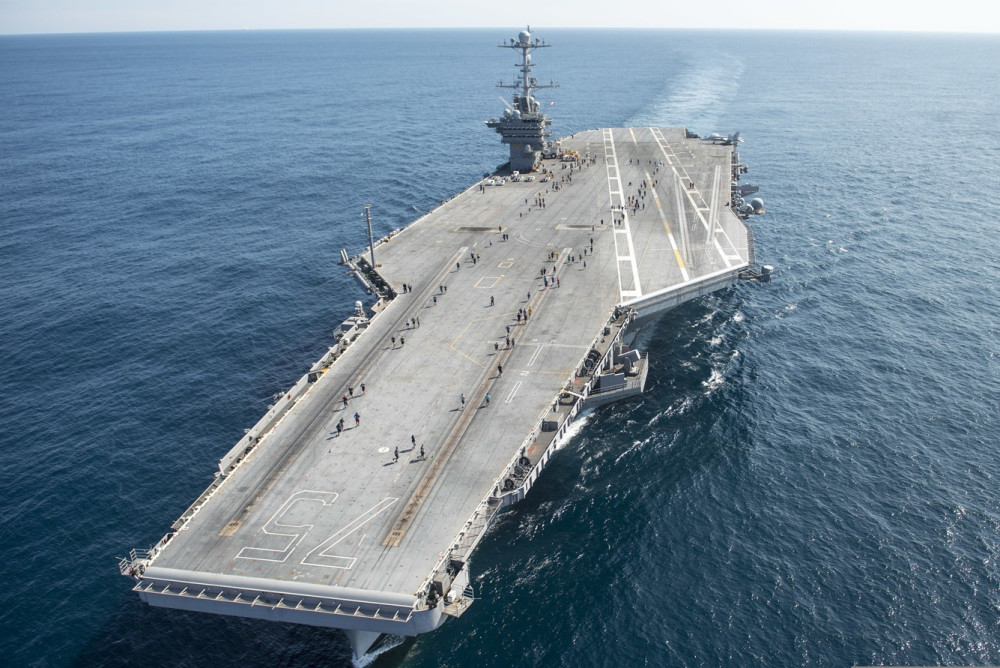
As of April 12, 2026, the United States has moved to blockade the Strait of Hormuz, one of the most critical arteries of global trade. Roughly 20% of the world’s oil and LNG flows through this narrow corridor . Now it’s effectively contested, militarized, and unstable.
This isn’t just geopolitics.
This is a direct shock to:
- Energy markets
- Supply chains
- Pricing models
- Corporate confidence
- Buyer psychology
And if you’re in sales, it’s a shock to your pipeline, whether you realize it yet or not.
The Reality: War Is a Sales Environment, Not Just a News Story
When conflict escalates at this level, the ripple effects are immediate:
- Oil prices spike → operating costs rise
- Shipping disruptions → inventory delays
- Market volatility → budget freezes
- Uncertainty → slower decision-making
We are already seeing signals:
- Tanker traffic has collapsed and shipping has been disrupted significantly
- Thousands of vessels have been stranded due to conflict and mine threats
- Analysts are warning of a global supply shock and potential market instability
This is not theoretical. Everything from energy rationed work stoppages in countries producing goods and services to the ability to access key input ingredients (nutrients) necessary in the production of fertilizer will have downstream consequences in global energy and supply chains.
This is the environment your buyers are now operating inside.
What Changes First: Buyer Psychology
Before budgets change, psychology changes.
And psychology is everything in sales.
In times like this, buyers shift in four key ways:
1. Risk Aversion Spikes
Deals that felt “safe” last month suddenly feel risky.
- New vendors = risk
- New initiatives = risk
- Change itself = risk
Even if your product is better, the status quo becomes the default.
2. Decision Cycles Slow Down
Not because people don’t want to buy.
Because they don’t want to be wrong.
Expect:
- More stakeholders involved
- Longer internal approvals
- “Let’s revisit next quarter”
3. Budget Scrutiny Intensifies
Every dollar now competes with:
- Rising input costs
- Energy volatility
- Supply chain uncertainty
Your deal isn’t just competing against competitors.
It’s competing against doing nothing.
4. Urgency Becomes Selective
Not all deals slow down.
Some accelerate violently.
Anything tied to:
- Cost reduction
- Efficiency
- Risk mitigation
- Supply chain resilience
…moves faster than ever.
The Hidden Truth: Sales Doesn’t Die in Turbulence. It Re-Sorts.
Most sales teams interpret instability as “the market is slowing.”
That’s lazy thinking.
What’s actually happening:
The market is re-ranking priorities in real time.
Winners and losers aren’t decided by effort.
They’re decided by alignment.
The 5 Strategic Adjustments Sales Teams Must Make Now
1. Reposition Your Value Immediately
If your pitch still sounds like:
- “growth”
- “innovation”
- “nice to have”
You’re in trouble.
You need to shift to:
- cost containment
- risk reduction
- operational certainty
- time-to-value
In war-driven markets, buyers don’t ask:
“Will this help us grow?”
They ask:
“Will this protect us?”
2. Shorten Your Time-to-Value Narrative
Long ROI timelines get killed in uncertain environments.
Instead of:
- “12–18 month transformation”
Sell:
- “impact in 30–90 days”
If the value isn’t immediate, it feels speculative.
And speculation dies during instability.
3. Over-Communicate Stability
Your buyers are asking questions they won’t say out loud:
- Will this company still be around?
- Can they deliver if supply chains tighten?
- Will support degrade?
You must proactively signal:
- Financial stability
- Operational continuity
- Delivery certainty
This is where most reps completely miss the mark.
4. Increase Activity, but Target Smarter
More calls won’t save you.
Better calls will.
You need to:
- Prioritize industries less exposed to energy shocks
- Focus on companies with strong balance sheets
- Target roles responsible for cost control, not just growth
This is where average reps fall apart.
They increase volume without increasing precision.
5. Lean Into Existing Customers
Your installed base becomes your most valuable asset.
Why?
Because:
- Trust already exists
- Risk is lower
- Expansion is easier than new acquisition
In turbulent markets:
Expansion revenue often outperforms net-new revenue.
The Counterintuitive Opportunity
Here’s what most people miss:
War and instability don’t just destroy demand.
They concentrate it.
We are likely entering a period where:
- Weak competitors pull back
- Marketing budgets get cut
- Hiring slows
- Sales teams become cautious
And that creates a vacuum.
If you can operate with clarity while others hesitate, you don’t just survive.
You take share.
A Hard Truth for Sales Leaders
Most sales teams are not built for environments like this.
They are built for:
- Predictable pipelines
- Stable pricing
- Linear growth assumptions
That world is gone (at least for now).
The question is no longer:
“How do we hit quota?”
The question is:
“How do we operate when the ground is moving?”
Final Thought: This Is a Test of Sales Maturity
Anyone can sell in a stable market.
Very few can sell when:
- Buyers are uncertain
- Costs are rising
- Global systems are under stress
This is where real sales organizations separate themselves.
Not by working harder.
But by thinking more clearly.
What to Do This Week
If you’re leading a sales team right now:
- Rewrite your core pitch around risk and cost
- Audit your pipeline for “fragile deals”
- Identify 10 accounts where urgency just increased
- Re-engage your top 20 existing customers
- Train your team on how buyer psychology is shifting
Because whether we like it or not…
The market just changed.
And sales teams that don’t change with it will feel it first.